25 Incredible Personal Biodomes

Richard Buckminster Fuller invented the geodesic dome in 1947, and his hope was to implement solutions for some of the larger housing issues during that time. You might not be surprised to learn that those issues, which included energy efficiency, a wiser use of resources and a safe residence remain the issues of the twenty-first century. Yet, during the last half of the twentieth century, dome homes, biodome structures and other geodesic forms were slow to catch the public’s attention. Now, however, with hurricane and tornado onslaughts, floods, the inability for the average family to own a safe home for less and a willingness to try something new, the general public has caught on to this “dome home” idea.

Now, designers have planned dome homes, tents, personal mini-domes and fantastical structures that serve as beautiful homes, that save up to seventy percent on heating and cooling and that can withstand many “Acts of God.” While domes have their opponents, their objections - more often than not - have been overturned. Building codes, sound problems, privacy and weatherproofing all have been resolved through compromise, extensions, building in levels, and building with new materials. This type of home uses less material and labor and are suited to mass production. At the same time, as you’ll see below, dome homes are subject to individual flair. Additionally, these homes are friendly to the environments where they’re situated - true “biohomes” that connect people with the earth, if only to help save resources.

The list below contains examples of structures designed by specific companies, homes owned by private individuals, and temporary and permanent dome homes that are built with various materials and methods. One thing you might notice is that most of these homes are wide open to the DIY builder, so all you need is a bit of land in some cases to build a home. Although the homes are listed in no particular order, this does not mean that we favor one dome home method over another or one design above any other layout.

  1. Energy StructureEnergy Structure: In the past, dome builders found it difficult to seal domes against rain. The most effective method to avoid leaks with a wooden dome is to shingle the dome. Energy Structures, Inc., located in Minnesota, has been in the business of building domes since 1980, and they use shingles in their design. This was the first dome company to design and manufacture the double-wall strut, known as the Energy-Strut® for super-insulated dome housing as well. Another complaint in the past was the fact that - since heat rises - the dome shape leaves a large volume that must be heated, yet cannot be lived in. Energy Structure homes contain a special “dome top heat recovery system” that recirculates the air and that saves energy and maintains a constant temperature throughout the dome. The site also contains pricing for various size domes for the DIY builder. The smallest 26′ dome runs about $24,000 including materials and labor. The 44′ dome can exceed $80,000.
  2. Big Bear Dome HomeThe Dome Home in Big Bear: If you’re unsure whether you want a dome home, you can rent this one to acquire a taste for multi-level dome home living. It’s located close to Los Angeles, California, yet that city seems a world away as you settle into this home’s ambiance. This spacious home comes with a conveniently attached two-car garage offers four private bedrooms (potentially five), three and one/half bathrooms, and has been redesigned and redecorated by professional designer/decorators - even a Feng Shui master. A unique, octagonal-shaped foyer, illuminated by vertically shooting spotlights, leads to a colossal living room with cedar-paneled walls that reach out to the pentagonal skylight windows, which light up the center of the house. You must call for current availability for rentals.
  3. Timberline GeodesicTimberline Geodesics: Can you imagine owning a home like the one shown at left for about $37,000? You can, along with the cost of labor (unless you’re a DIY builder). The dome size is 35′, with two floors that total 1,994 square feet. Three bedrooms and two baths plus a garage makes this a perfect home for a small family. What makes Timberline homes unique is their plan for extensions from the dome. The extensions serve as space for the two downstairs bedrooms (or an office space), as well as the large kitchen and dining area. If you’re intimidated by the thought of building a dome home, Timberline makes it sound easy. All wooden components of a Timberline Dome are pre-cut and pre-drilled to exacting specifications, and color-coded to make it easy for unskilled people to assemble them with precision and confidence. Two people can complete the framework for even the largest dome in less than two days. The largest piece for a 45′ dome is a 10 ft. long 2″ x 6″, which is easily handled by one person. Timberline offers plans and construction images on their site.
  4. Good Karma DomeGood Karma Domes: How can you not live in a home that has good karma? These homes are perfect for the DIY builder, as the paneled domes come with triangles pre-assembled and color coded for easy construction. They take pride in their work, as their designs are straight from Buckminster Fuller’s original patents and tolerate only the finest tolerances. According to this company, Good Karma Domes have been calculated by many independent certified engineers and 3-dimensional space frame computer analysis and tested in real-life extremes; tornadoes and hurricanes. A failure point has not been reached. They also have an unusual set up for the financial options. Once you purchase a kit from Good Karma Domes, you become a reseller. So, anyone you send their way can net you five percent of that sale. They have many options for floor plans, and each one is priced differently. So take your time and browse, but don’t expect a price. You’ll need to call for that information.
  5. Hurricane DomeDome Incorporated: This company manufactures homes for all uses, from small to large, from energy efficient to unusual. Their claims to fame include the patent for a connector for geodesic home structures, a steel frame, and the hurricane-proof geodesic home like the one shown here. They’re also known for their annual summer workshop, where attendees can learn how to design a shelter for any number of challenges. For instance, in 2008, the seminar challenge was to design a shelter for a family of that person’s choosing. That shelter needed to be ecologically friendly with very little impact on the environment. So, while you’ll discover little about this company on their site (but, plenty about the homes that they’ve helped to build through photos and plans), you can learn much about their focus through news about their annual retreats. Prices for the least expensive hurricane and extreme snow load home such as the one shown here run about $15,000 for the materials needed for a 26′ diameter 2v 3/6 Half Sphere.
  6. Sigler ResidenceSigler Residence: This dome home, located in Pensacola, Florida, survived Hurricane Ivan without a scratch. Designed by architect Jonathan Zimmerman, the home is constructed from air-formed thin shell concrete structures which are very similar to geodesic homes. But, these shells are more like ‘ballons’ of fiberglass-reinforced nylon or other fabrics that are used to form the energy-efficient structures. After that balloon is inflated, the inside surface is sprayed with rigid polyurethane foam insluation. Steel reinforcing bars are then tied into place against the insulation, and concrete is sprayed to cover the steel. Later, the balloon can be coated with the desired color or texture, and earth can be bermed against the structure. Zimmerman also is building one of these domes in Alaska, where he says it will survive an avalanche. This particular residence is a FEMA-funded project, and it’s for sale for $1,275,000.
  7. Eco-DomeEco-Dome: According to this site, when you learn to build an eco-dome, it’s an excellent way to prepare for building a much larger structure such as a three-bedroom home. The Eco-Dome is only 400 sqaure feet, but it provides the basics needed for expansion and, when finished, these homes are simply beautiful. The Eco-Dome plan is a part of the Cal-Earth educational and research program. It is an educational construction document developed to be used in conjunction with the Cal-Earth apprenticeship course. So, if you live in the area, you may be able to retrieve and build a plan that has already been approved for your region. An Eco-Dome package includes construction document blueprints, engineering calculations for the 1997 UBC / 2001 California Code, a specification, title 24 energy energy calculations, and the engineering record. Plus, you can get a documentary DVD and video showing step by step construction of the Eco-Dome. Price? $2,400 for a single unit and $3,200 for a double unit (800 square feet), including shipping.
  8. Kolb's DomeKolb’s Dome: This dome was built with the help from American Ingenuity, a company that has been designing floor plans and manufacturing eco-conscious dome home kits since 1976. Their claim is that users can save up to seventy percent on heating and cooling bills, thanks to seven-inch thick rigid expanded bead polystyrene (E.P.S.) insulation. Plus the insulation is not interrupted by wood and there is no wood in the home’s exterior walls. The exterior of the dome is concrete that you paint with latex paint. This Kolb dome home consists of an A.I. 40′ dome linked to a 27′, two car garage. The garage first floor is 555 square feet with a 16-foot-wide overhead door and a 680 square-foot attic. The attic floor is fully suspended from the dome shell so their are no columns or supporting walls to interrupt the garage first floor. For the year 2003, the monthly average electrical cost for this home was $48.88. This cost included heating and cooling, well pump operation, hot water heating, cooking, laundry and sanitary. A home similar to this sold for $224,000 in 2006. Yet, an A.I. 40′ dome kit with entryways, dormers and skylights (about 2,000 square feet) costs about $30,000 for materials today.
  9. Hilltop Dome HomeHilltop Dome House: This dome home is one of Las Angeles’ unusual homes. Using ideas once promoted in The Whole Earth Catalog, this pioneering work of vertically-interconnected spaces defies domestic convention. Flexible live-work arrangements are accommodated within the lower levels, illuminated by a dozen skylights, earth sheltered and topped by a green roof for maximum thermal efficiency. The geodesic dome above shelters a vast interior studio volume for meditation, art, rehearsal, performance, or entertaining. The interior area totals approximately 1812 square feet on a site of nearly a quarter acre. The price, which was posted in 2007, was $799,000. See more photos at Curbed LA, including one that shows an incredibly crafted garage.
  10. Domes NorthwestDomes Northwest: The home pictured at left is a product developed by Domes Northwest. Note the extensions to the sides and at top. One previous complaint about dome homes has been sound - while the domes are acoustically perfect for musicians, regular folks discovered that a sound produced in one side of the dome could be heard throughout the dome. To counter this objection, extensions provide space that avoids that sound issue, as home offices, bedrooms, and other rooms that require privacy can be built into these additional extensions. Rooms like the one at the bottom of this dome home also provide additional opportunities for solar heating. Visit Domes Northwest’s site to view plans and more photos on their projects. This company takes into account the rising costs of various commodities, so their prices often vary. Currently, a 51′ diameter dome with three openings runs about $31,374 for basic materials. This Wisconsin home currently is for sale for $499,000.
  11. O2 SustainabilityO2 Sustainability: We wrote about this project in our treehouse article, and it deserves another mention in this article for its earth-friendly and sustainable nature. It uses 100% sustainable materials and does not harm the growth of the host tree in any way. It will fit in any tree, single trunk, multi trunk or even multiple trees in a forest. For example, in the image shown here, the biodome treehouse at left (Interior Tension Canopy) and right (Rigid Exterior Canopy) can be connected by a swinging bridge. If heights bother you, the model can be built on the ground. Drawn, built and presented by 23 year old furniture designer Dustin Feider, these geodesic homes can be built with his help, including the lift system. Prices, however, are not as transparent as the “stealth model” shown in his catalog.
  12. 20-Foot Yurt near Moab, UtahYurts: While not built in a traditional geodesic shape, a yurt is a biospace that connects the people within totally to the earth below. The circular design and spacious interior, the yurt - based upon the traditional Mongolian yurt - is conducive to both social activity and quiet contemplation. Modern day Yurts are self-supporting structures that are heated and cooled with the help of their aerodynamic shape. The Colorado Yurt Company, located in Montrose, Colorado, has an online calculator to help determine prices and sizes as well as options. For instance, a 24′ yurt (a little over 2,000 square feet) costs $7,570. If you live in the UK, you can contact Woodland Yurts for a nomadic tent. Their prices start at 900 pounds, or $1,568.67 USD, for a ten-foot rustic. The yurt shown here is a twenty-foot space located near Moab, Utah.
  13. BioHomeBioHome: If you yearn for simplicity and the ability to get “off the grid,” then BioHomes may help you meet your goals. They offer every possible device available, including solar-powered toilets, to get you going with your geodesic framework, bubble windows, and insulation that won’t sag, shrink or invite mold, mildew or bacteria. BioHomes’ goal is to “contribute to being part of the solution” to a sustainable world. BioHomes’s pricing includes tubing. For instance, one-inch tubing for a 44′ biohome is $6,400 plus shipping and handling.
  14. design ObjectDesign Object: Talk about a personal space! This large inflatable “Chill Out” room was designed by David Sevoir in 2001, and it serves as a lovely space to relax both indoors and outside. This personal biodome is seven foot in diameter with thirty-one clear and white PVC panels. It weighs almost thirty-eight pounds, and it requires a compressor (available at most hardware stores for about $30-$40). You can seat up to two adults or three children in this private bubble, so you might want to share. Cost for this modicum of privacy? $400.00.
  15. Underground DomeUnderground Dome: This New Zealand beauty was built by architect Fritz Eisenhofer, who wanted an energy efficient oasis that could withstand the windy coastal weather. He excavated and built the foundation for this home 12-feet below the surface. The home is comprised of five cement domes, and the largest contains the kitchen, living and dining areas as well as a swimming pool that is flanked by a tropical garden and a mezzanine sleeping area. Four smaller domes contain a study, bathrooms and the entranceway. The glass wall, seen here, catches the southern sun, and fans move that heat around the house. The underground atmosphere is conducive to acting as a heat sink, storing warmth for an even temperature twenty-four hours a day and 365 days a year. This home must be priceless, as we’ve yet to find a dollar amount on its head.
  16. Shelter Dome TentShelter Dome Tents: If you don’t want to build a dome home, then take one on the road with you. These “YurtDomes” are lightweight and large, made with a strong, tear-resistant fabric and non-puncturing tarp fasteners and leak proof. These tents can serve as family living spaces, camping tents, emergency shelters, playrooms and more. These 14′, 18′ and 20′ Domes can be set up by one person in 30 minutes without tools. The Geodesic Dome that is ten foot in diameter and five foot high (75 square feet) is only $480.
  17. Flag Pond Hobbit HouseFlag Pond Hobbit House: Complete with claw-foot bathtub, this Hobbit home, located in Tennessee, was constructed by War Bonnet Construction. Mr. Ansel, the owner of the construction company, has been building domes and has completed 208 structures ranging from eight feet to 92 feet in diameter. Ansel completed this 1400-square-foot monolithic dome home in Flag Pond, Tennessee in October 2004. It’s earth-bermed, and it’s the second underground dome that Ray has built. The owners are fans of J. R. R. Tolkein and his characters in The Hobbit and The Lord of the Rings, so Ansel designed the front of this dome to resemble Bilbo Baggins’ Hobbit hole. There’s no sign the owners are willing to sell, but a home such as this monolithic home can cost from $9,000 upward. Here’s an image of an above-ground monolithic structure, sans frills.
  18. SolaleyaSolaleya Home: Perhaps you would like a dome home that rotates for unparalleled passive solar energy capacity? Solaleya will help you meet that goal and more with their models that have been proven to be resistant to hurricanes and earthquakes. But, if you don’t want to spin like the earth in your home, you can choose a stable model or a “Transit.” The latter model can be added to a home to accommodate guests, to create a studio, etc. The twenty-five foot, three-level rotating model (about 6,307 square feet) costs approximately $534,000 in materials and $335,000 in total build out.
  19. Joshua Tree Dome RetreatJoshua Tree Dome: If you want to try out a larger dome home, this large 2500-square-foot geodesic dome sits on five acres with views from one of the highest locations in Joshua Tree, California. Situated very close to the Joshua Tree National Park entrance, this for-rent property is perfect for a family getaway,corporate retreats or classes. It has sleeping accommodations for twelve, with an 800-square-foot master bedroom loft, 30-foot ceilings, fireplace, beautiful wood interior, an all new hickory kitchen designed and built by Will Coon, with new appliances, and a large 360-degree wrap-around deck on the second story. A 2000-square-foot activity wing is attached to the dome, and this building includes a full kitchen, a 40-foot indoor swimming pool, jacuzzi, sauna, exercise room, meditation loft, lounge area, and bar. The pool opens up to a patio with a barbecue and outside dining area that overlooks its own private valley. While we don’t know how much it cost to build this dome and its adjacent outbuilding, we do know that you’ll pay about $400 per night to stay here. But, this rate is for up to ten people, so break it down to $40 per person, which is cheaper than most motels we know!
  20. ZendomeZendome: This image reminds us of a mini Taj Mahal, with the reflecting pool and majestic illumination of the geodesic dome. This luxury, designed by Zendome in Germany, can enclose a floor space of 30 to 300 square meters. The dome allows up to three circular entrances, and domes can go together to form a ‘domescape.’ While these Zendomes appear delicate and ethereal, more than 1,000 kilograms can be suspended from the framework - so you can carry on with “the suspension of high-wire circus acts, compact cars, or animal cages, allowing for a new world full of possibilities.” The prices for these domes were not advertised, but we’ll wager they probably range between $500 and $1,000 USD.
  21. Ply SphereSteve Miller’s Ply Sphere: This dome home may remind you of children’s rhymes, fairy tales or your last flashback. Nonetheless, this home is viable, and Miller is a pioneer in plywood dome construction. Plywood domes are very profitable in the sense that the plywood sheets don’t need to be cut or modified. Secondly, the positioning of the sheets is advantageous for water impermeability.The basic building is inherently watershedding, and no shingles are needed. In fact, the shell is so strong that frames often aren’t needed. Read more about Miller’s concepts [PDF].
  22. Mountain ViewMountain View: This sprawling ranch-style home is nestled into the rolling hills located south of Pueblo, Colorado. Ray and Beth Merrell, owners, enjoy sculpted window openings and a three-season patio dome that frames a view of the nearby mountains. While this home, which was designed by Cloud Hidden, might not look as “in place” in the eastern mountains, the air formed, super insulated, steel reinforced, sculpted concrete home looks right at home in its arid surroundings here. Cloud Hidden claims that their homes are “the strongest, most disaster resistant, energy efficient, and artistic homes that can be built today.” Visit their site to view the spacious interiors in their designs.
  23. XanaduXanadu: If you happen to travel somewhere near Sedona, Arizona, you might not be able to stop in the area to check out this rainbow-colored personal dome living space. Although the family that lives here wants to turn their home into the “Tour Home of the Future,” zoning laws have impeded their progress in that regard. But, you can visit the home’s Web site to learn more about their home and to view photos of the exterior and interior. This is a multi-dimensional monolithic concrete home that contains ten domes and that was originally designed and modeled after “Xanadu, The Computerized Home of Tomorrow” built in Orlando Florida over fifty years ago. Why did this family paint their domes the colors of the rainbow? To make them stand out! They’re definitely evangelists about these structures and want to spread the word.
  24. Ballan Dome Round HouseBallan Dome Roundhouse: One problem with dome homes is that your neighbors may object to your taste and what that dome might do to property values. But, if anyone has answers to those questions and more, it would be Anthony (Tony) Clarke, an Australian dome home owner. Despite several, relatively recent occurrences of high winds that tore away roofs, blew away fences and uprooted trees, Ballan’s Council refused to approve plans for Clarke’s planned domes. Residents in that neighborhood had objected to the unusual, “igloo-like look” of the domes, but - after Clarke found a way around building codes - those same neighbors ask for tours and instructions on how to build these monolithic homes.
  25. Disappearing Dome: Paul and Barbara Stitt in Manitowoc, Wisconsin, built this state’s first-ever dome home. This is a 55-foot diameter, three-story monolithic home. And, to get around the “igloo-looking” objections, they painted it light blue. Sometimes, during a clear day, it’s easy to miss this house! Their 4000-square-foot home contains two garages and a housekeeper’s apartment (1,500 square feet), a living room, dining room, guest bedroom and bath and storage, laundry and a place for Barbara to grow orchids in the sun room. The cost for this dome home is unknown, but you can discover more about monolithic homes at The Monolithic Dome Institute.
7 Comments

10 Amazing, Beautiful Houses Built from Trash

Are you seeking a “green” way to build your next home? We’re operating on the principle that one person’s trash is another person’s castle. While ‘trash’ isn’t always free, using cast-offs to build a home is a great way to recycle. While the homes below use tires, cans, earth, plastic water bottles and other items - or a combination of these items - the possibilities are as limitless as your imagination and your local building codes.

If you’re expecting ‘trashy’ results with this recycling effort, we hope that our choices listed below will surprise you with their depth of creativity, beauty and charm. Although the homes are listed in no particular order, this does not mean that we favor one ‘trash’ method over another or one design above any other layout.

  1. Castle EarthshipEarthships: Michael Reynolds, author of several books on the topic of earthships, conducts his business near Taos, New Mexico. In and around Taos, you’ll find several communities filled with homes constructed from used tires filled with earth and stacked up like bricks. The surface is then plastered with adobe or cement so the tires are hidden. But, earthships go beyond the used tire concept to include empty aluminum cans, ecological concepts such as graywater, composting toilets, indoor gardening and solar power. A note to DIY builders: a tire-house building is easy to construct, but it tends to be labor intensive and the wood framing is not simple. Final construction ranges from fantastical to elegant, including this “Castle Earthship,” a basic plan with an advanced version that contains a two-story jungle greenhouse. The price for this type of home would vary, depending upon whether or not you pay for the used tires, your construction help, and the time you have on your hands to do some of the construction yourself.
  2. Shipping Container HomeShipping Containers: You can find a wide range of shipping container home/office/emergency shelter/low-cost housing examples on the Internet, but few reach the elegance shown by this example. Leger Wanaselja Architecture finished this totally green container house last year, bringing a more traditional look to the residence that’s located on top of a hill in an East Bay suburb overlooking San Francisco, California. This house defies the usual super-industrial aesthetic often found in this type of construction. The 1350 square foot, three bedroom house incorporates three forty-foot re-purposed refrigerated shipping containers, which provides instant exterior siding, insulation, and a built-in structural frame. The containers were stacked two stacked on one another, and the third cut in half and stacked on itself. The cost for this type of dwelling would depend on the price of the shipping container and other goods needed to complete the construction. You have two options: find a company that specializes in building homes from shipping containers, or build it yourself. As a rule of thumb - according to the Shipping Container Housing Guide - you may expect a price of $1,500 to $2,000 USD for a new standard 40-foot container without any modifications, and with transport and handling included.
  3. 747 HomePlane Home: No, we don’t mean “plain” at all. This home, which is now under construction, is going to be built basically from parts salvaged from a Boeing 747. The jet’s wings will sit on thick concrete walls and the nose will point to the sky and serve as a meditation chamber. The first-class cabin will become an art studio and the signature bulge on top of the 747 will be a loft. Every part of this plane will be used to build the home and more than six outbuildings on a piece of southern California property. The architect, David Hertz of Santa Monica, found a decommissioned Boeing 747-200 through Aviation Warehouse for between $70,000 to $100,000 USD, so that hurdle was passed with flying colors. But, Francie Rehwald, the new home owner, spent $200,000 on consultants and plans to spend at least two million dollars to complete the full project. At least the owner knows that this new home will withstand winds at higher altitudes!
  4. Big Dig HouseThe Big Dig: Located in Boston, Massachusetts, this home was constructed of steel and concrete salvaged from Boston’s Big Dig, using over 600,000 lbs of materials. The Big Dig is the unofficial name of the Central Artery/Tunnel Project (CA/T), a megaproject that rerouted the Central Artery (Interstate 93), the chief highway through the heart of Boston, Massachusetts, into a 3.5 mile (5.6 km) tunnel under the city. The home was designed by Single Speed Design, and it won the AIA/BSA (Boston Society of Architects) Housing Design Award. Standing at over 4300 square feet, the structure represents a modern example of what is possible in sustainable building. Although similar to a pre-fab system, subtle spatial arrangements were designed from highway components. Most importantly, the house demonstrates an untapped potential for the public realm: “with strategic front-end planning, much needed community programs including schools, libraries, and housing could be constructed whenever infrastructure is deconstructed, saving valuable resources, embodied energy, and taxpayer dollars.” The cost is not mentioned, but if the components basically were free, then just cut the basic materials cost (unsure if plumbing was salvaged) from the price of a 4,300-square-foot home to get somewhat close to an estimate.
  5. The Re-Used HouseRe-Use Your Home: In 2007, Shannon Quimby and her husband discovered that they would need to demolish their Portland, Oregon home. Rather than use a bulldozer, the Quimbys created the REX project, or the “Reuse Everything eXperiment.” They meticulously tore their home apart, and saved their windows, doors, flooring and more to reconstruct their new home. Anytime they needed to replace an item, they made sure those materials were “green.” Although a cost isn’t mentioned, Quimby stated that she and her husband saved “thousands of dollars” in the construction of their new home. If you’re interested in building a new home from recycled building materials, you might want to become familiar with the Building Materials Reuse Association (BMRA). This non-profit organization aims to educate the public about how to reduce consumption of new resources, avoid landfill waste and pollution, create markets and increase cost-effectiveness, and expand job opportunities and workforce development skills as they educate individuals on the deconstruction and reuse of building materials.
  6. Recycled Rammed Earth Works HouseRecycled Rammed Earthworks Home: If you want to get back to the earth, you can use recycled materials, soil, cement and water to create a home like the one you see here. You might, however, want to seek the help of experts like David Easton, a leading innovator of forming and delivery technologies for the construction of rammed earth walls and the owner of Rammed Earth Works. This home is 3,136 square feet with two bedrooms, two and one-half baths and a study, but it’s a modest home despite the size. The home was built with “P.I.S.E.,” or “pneumatically impacted stabilized earth” that was borrowed from the property. A spray mix of that soil, cement and water is held in temporary boxes that, when removed, result in eighteen-in-thick walls that don’t require painting, finishing, or sheetrock. The blocks then are stacked to construct the home. Easton’s company can provide feasibility studies, soil evaluations and mix designs, pre-construction testing and consulting to contractors and owner builders. So, you can build the home yourself, saving costs on some construction if you want. Easton also will rent equipment for you to complete the project. If you want to explore other earth-soil projects, Rammed Earth Works can help you with that exploration as well.
  7. Cob Mud HutCob Mud Hut: If your plans to live close to the earth are a bit more modest than the project shown previously, you can build a little mud hut with what is known as “cob” construction. Patrick Henneberry, owner of Cobworks in British Columbia, hosts workshops on how to build with a mixture of sand, clay, loose straw and water. These homes, according to Henneberry, can last for hundreds of years because the walls can “breathe and transmit moisture from cooking, washing, and breathing.” All the other materials used to build these homes are, ideally, recycled. This includes the lumber, flooring, doors and windows. Expect circular walls for a more natural feel, and great thermal mass - this means that the building will retain heat and radiate it into the house as the day cools down. The price of a house like this would probably be less than a rammed earth structure, simply because it takes less equipment to produce the home. Plus, it sounds like fun - more like a barn-raising than a solitary affair.
  8. Mad Max ReduxMad Max Redux: Occasionally, on those weekend trips to admire fall colors or spring buds, you might run across a home that looks like something you’d see in a Mad Max movie. This is what happened to the owner of Mother Wit Writing and Design. On her return from a National Wildlife Refuge near Taos, New Mexico, she saw a “shimmering structure that looked like a church — but there was something odd and not quite symmetrical about it, even from a distance of three or four blocks.” As she drove closer, she discovered that this object was a home constructed from recycled boards, windows, rocks, bits of glass, pieces of metal and many aluminum cans. Whether the owner built the house from scratch or used the materials to patch an already existing home is unknown. But, you may admit that this is an original use of recycled materials, and the cost may have been only the time consumed in construction. Before you attempt a project like this, it might behoove you to check your local building codes. No sense in spending time (if not money) if you can’t comply with local laws.
  9. Water Bottle HomeWater Bottle Home: You may know that there’s a movement against plastic water bottles, as Americans consume about 70 million bottles each day, and the problem isn’t any less in Europe. Those bottles usually end up in landfills, but Tomislav Radovanovic, from the central town of Kragujevac, Serbia, figured out how he could put a dent in the landfill problem by constructing his retirement home from those empty plastic bottles. Note the colorful patterns in the house, a execution that was carefully planned. Radovanovic told the national news agency, Tanjug, that he hopes to enter the Guinness Book of Records and has already sent them an application. The home’s foundation is concrete, but the rest of the house was constructed from plastic bottles. This practice isn’t new, as homes have been built from bottles before; however, most of those homes used glass bottles. The price of this home would be minimal, as plastic bottles are yours for the taking from any garbage can. All you need is a foundation and recycled materials for doors and windows. If you’re truly resourceful, you can make a plastic-bottle floor as well.
  10. Salvaged Car FerrySalvaged Car Ferry: What if you’re not a land-lubber, but you don’t know how to build a boat? The next best thing, perhaps, is to find an abandoned car ferry, hire a top-notch designer like Olle Lundberg, and build a floating home that would rival most modest castles. Lundberg took this advice, but he hired himself when he found a decommissioned Icelandic car ferry docked at Pier 54 in the Mission Bay neighborhood of San Francisco, California. Lundberg found the ferry for $260,000 through shiprepo.com, and he spent $600,000 repainting the exterior, rebuilding the engine, converting the electrical system to United States standards and other alterations required to make the ship habitable. He and his wife also pay $1,500 a month in docking fees. But, with two stories and a dining room table built from an eighteen-foot-long slab of cypress left over from the Slanted Door, a popular Vietnamese restaurant Mr. Lundberg designed in the newly restored Ferry Building, what more could you ask for? Maybe another residence built from recycled goods (or, trash)? Well, Lundberg does that as well, as his second home, located two hours north from the docked ferry, was built entirely from materials salvaged from houses and offices that Mr. Lundberg’s firm, Lundberg Design, built or remodeled.
8 Comments

The 10 Oldest Neighborhoods in the World: Live in a 2300 Year Old House

Do you long for bygone days? Or, do you have a history or archeology streak hidden within your soul? Unfortunately, unless you like living in a cave (which is entirely possible), many residences haven’t lasted for more than 200 years, let alone for over two centuries. But, some neighborhoods have been around for a few millennium, and antiquity lovers can find a real estate investment in or near some of the oldest settlements discovered to date.

While some might dispute whether one region of the world holds older artifacts than others, the point to this list is to offer neighborhoods, cities and even entire regions that have been occupied continuously since their inception. Therefore, while the western U.S. might offer up the oldest human remains in the U.S. at 14,000-years-old, those nomadic cave-dwellers didn’t settle down in what is now known as the state of Oregon. Hence, Oregon didn’t make the list. (Neither did San Antonio.) Plus, while Rome may be older than Malacca, Malaysia, we wanted to offer a bit of worldwide variety for your reading pleasure. So, we included Malacca and avoided Rome and included the U.S. although this country is, by all worldly standards, architecturally young.

Just because a settlement is ancient, old homes in that area may not be available. In this case, we offer suitable alternatives. Available homes are new properties sited on old grounds, renovations, or properties located safely outside a politically volatile area or located as close as possible to uninhabitable ruins. Finally, although this list is numbered, this does not mean that we value one ancient habitat over another. We did, however, try to place the areas by age, with the oldest community listed first.

  1. Olomouc, Czech RepublicOlomouc, Czech Republic: In 2005, scientists confirmed that bones found in the Czech Republic represent the earliest human settlement in Europe, dating back about 30,000 years. This area already is known for the Mladec Cave paintings, and it’s easy to travel to the site from Olomouc, a city located just thirteen miles south. Olomouc is rumored to occupy a Roman fort site founded in the imperial period. Although a legend, archaeological excavations revealed remains of a Roman military camp from the time of Marcoman Wars close to the city. The ancient town of Olomouc ranks as the second most important and largest urban conservation area in the Czech Republic behind Prague; therefore, any home you may find in this area could hide historical artifacts beneath its foundation. You can view some Olomouc residential real estate, which currently ranges from Kc200,000 ($12,153.62 USD) to Kc62,867,345 ($3,820,330.35 USD).
  2. Executive home in CyprusPaphos, Cyprus: Jericho, Palestine represents the world’s oldest known settlement, with significant archaeological remains dating back as far as 8000 BCE; but, like most risky investments, the atmosphere in the Middle East currently may prove too volatile for many real estate investors. Instead, you might look to the southwestern region of Cyprus as a possibility, a semi-peaceful area that would allow you to visit ruins from ancient Greece to Egypt (Turkey illegally occupies the northeastern section of this island). Cyprus alone offers artifacts that date back over 9,000 years, and the area of Paphos offers more than just beautiful sea views. This entire area was a Roman capital that dates from 1400 BCE. Plus, legend has it that the city is built on the spot where the Greek Goddess of Love, Aphrodite, was born. Enjoy everything that love and money can bring with this four-bed, four-bath executive suite with panoramic views, A/C, touch pad controls, underfloor heating, large pool, electric gates and designer kitchen for 1,550,000 Euro ($2,290,682.56 USD).
  3. Villa outside CadizCadiz, Spain: Historians have long known that Phoenician traders founded Cadiz more than 3,000 years ago. Now, archaeologists believe they have found evidence that this city may be over 9,000 years old, which means that Cadiz could be Europe’s oldest inhabited city – the original Phoenician Gadir (meaning “the fortress”), or Gades in Roman times. The oldest artifacts were found sixteen miles southeast from Cadiz in 2007, but this Spanish city is surrounded by a sense of the centuries for miles. For instance, you can find a 200-year-old villa for sale just forty-six miles east of Cadiz in El Gastor. This villa, shown here, has undergone extensive renovation, yet the owners retained many of the original features. You’ll find beautiful old wooden beams in the bedroom and the bathroom, a wood burning stove and a large hallway upstairs with a seating area and French doors leading onto a small balcony. How much for a bit of history? A mere 129,000 Euros, or $190,894.76 USD.
  4. Shirley PlantationAlong the James River, Virginia: Claims to the ‘oldest settlement’ title in the U.S. are rife with debate, and this contention would seem laughable when compared to the Middle East - except for evidence of Native American settlements. While it’s well known that St. Augustine, Florida claims to be the oldest settlement in the United States (Spain, 1513, evidence of Native American farming since 500 BCE) and the Oraibi Hopi Reservation in Arizona claims the oldest continuously inhabited settlement within the U.S. from 1100 CE, few historians have recognized the voices of the Monacan tribe. The Monacans lived in villages with palisaded walls, and their homes were dome-shaped structures of bark and reed mats. They would leave their villages every year to visit their hunting camps, they mined copper and buried their dead in mounds, which reveal 10,000-year-old artifacts. When the English arrived in Virginia, they pushed the Monacans west along the James until they were almost extinct. But, their descendants are here today, and the Monacan museum, located in Amherst, Virginia, provides testament to their survival. It is along the James that you’ll find Jamestown and Kecoughtan (now known as Hampton, the oldest continually occupied English settlement in the U.S.). This is where you’ll also find Shirley Plantation, which was built in 1613 (pictured here from a print c. 1900). This is the oldest plantation in Virginia and the oldest family-owned business in North America, dating back to 1638. The history lover can begin in Hampton, near Newport News on the Chesapeake, and work his way to Iron Gate along the James to find homes that easily meet the century-old mark and that have not been designated as historical relics. Some homes even survived the Civil War. But, the oldest homes, perhaps, can be found just west of Richmond, where the Huguenots (French Protestant refugees) settled on an abandoned Monacan Indian village in 1700. Occasionally, one of these early eighteenth-century homes will go for sale in Powhatan County. Prices for the average home in this county usually top at $600,000 USD.
  5. Niderost HouseSchwyz, Switzerland: If you want to know what a timber house looks like after 800 years, take a look at the oldest timber building in Europe, the Niderost house in Schwyz, Switzerland. This house has been dismantled and is in storage, as the Swiss goverment wants to restore it to its original glory. But, visitors to this area can view another house of the same style from the same period, as the Bethlehem house - located on the Ital-Reding Estate - is open for tours. Schwyz is one of the founding cantons of Switzerland, but findings show that Schwyz has been settled for thousands of years. Artifacts that date 5,000 years have been discovered in the northern region of Schwyz in the Hurden and Freienbach areas on Lake Zurich. Individuals who wish to live in something other than a timber building in this region can find ultra-modern digs (price on request) that may, literally, sit on a future archaeological dig.
  6. Cathedral in TiculTicul, Yucatan, Mexico: Four-foot tall rust-colored clay pots and leather shoes mark the two major industries in this 3,500-year-old Mexican settlement, located approximately sixty miles south of Yucatan’s capital city, Merida. Originally settled by pre-Columbian Mayans, Ticul has represented North America’s oldest known settlement. After the Spanish conquest of Yucatan, Ticul was established as a Spanish colonial town in 1549. Ticul achieved the status of a city in 1847. Over half the population still speaks the Maya language as their first tongue, although Spanish is also understood. In this city, you will see the old - the Cathedral (shown here), colonial buildings, thatched roof Mayan homes - and some new - the open-air stage, hotels, restaurants, a market, a telegraph office, banks, pharmacies, medical assistance, Internet e-mail services, and tricycle taxis for hire. For individuals who seek tranquil living among ancient surroundings, yet who want to live near large-city offerings, Ticul could be the ticket. Or, if you prefer to live in the general area of Mayan ruins within four miles from Ticul, you might consider this abandoned hacienda. This property holds an existing wind-powered water pump, irrigation tanks, bebederos, corrals for horses and a cave with 1,00-year-old stalactites. While the buildings are in need of major repair, you can purchase the total package, including 907 acres, for a mere $550,000 USD.
  7. Asmara real estateAsmara, Eritrea, Africa: Up until 2002, historians presumed that Eritrea’s capital city, Asmara, was 700 years old. But, scientists recently discovered an entire city under the outskirts of Asmara that dates back 3,000 years. This discovery would make Asmara the oldest settled agricultural community in Africa. The irony to this discovery is that Asmara’s architectural face was revamped during the twentieth century, as Italy (which occupied Asmara in 1889) rebuilt this capital city in the 1930s. The Italians used the city to experiment with new and radical designs, basically placing Asmara in the same light as today’s ultramodern Dubai. Growth continues in this area located south of Egypt and across the Red Sea from Yemen. New condo developments already have disrupted archaeological studies of Asmara’s ancient ruins. But, this growth allows residents to become part of African history in more ways than one. The lovely home shown here is a prime example of Asmara real estate, thoroughly modern “price upon request” living on the edge of priceless antiquity.
  8. Gum trees along Lamphun - Chiang Mai highwayLamphun, Thailand: If you’re familiar with the saying, “older than dirt,” then you might want to consider purchasing vacant land in what is considered Thailand’s oldest city. The historic Asian town of Lamphun, if not the oldest city in Thailand, certainly is a contender for “longest continually inhabited settlement” in this country. The ancient fortified city was founded, according to legend, in 660 CE, almost six centuries before the nearby city of Chiang Mai and more than 1,000 years before the Thai capital was moved to Bangkok in 1782. Little remains of Lamphun’s ancient city walls, though the heart of the Old City is still surrounded to the north, west and south by well-preserved and tranquil lotus-filled moats. Surrounded by magnificent gum trees (shown in the photo here of the Lamphun - Chiang Mai road) and ancient Buddhist temples, Lamphun offers an ancient small-town feel yet offers the amenities provided by a nearby larger city. While beautiful homes can be had in and around Lamphun, the availability of unoccupied land for sale could provide the real draw for this ancient area. Investment in this particular piece of vacant land, located in Lamphun’s northern industrial district, runs at 25,000,000 Baht, or about $734,365.36 USD.
  9. Malacca BungalowMalacca, Malaysia: Located just south of Kuala Lumpur, the historically rich state of Malacca was founded by Parameswara, an exiled prince from Sumatra, in 1396. Strategically located on the ancient Asian spice route that linked China to India and the Far East, Malacca (also known as “Maleka”) provided sailors with a fiendly and open port as they passed by. Eventually, Malacca grew into a thriving trading center, but its independence was cut short by Portuguese colonization in the early sixteenth century. The Dutch then took control in 1641 and then the British in 1824. Although Malaysia declared independence in 1956, English, Dutch and Portuguese styles continue to strongly influenced the town’s architecture. Because the city originally was built from wood, there are no reminders of the power once wielded by the Malaccan Sultanate; however, along the shores of the Malacca River, the scene has probably changed little. Look especially for the Portuguese influence, as this country taxed housing by width. This policy accounts for a building that can be no more than twelve feet across but that can easily extend backwards two hundred feet, hiding an interior filled with a linear succession of high-ceilinged rooms and courtyards. One such replica of this type of architecture - on a lavish basis - is the bungalow shown here, designed with intricate geometry of roof planes and flooring (inquire for price).
  10. Old San Juan SweetieOld San Juan, Puerto Rico: If you’re a history lover, there’s no reason to live in San Juan unless you can live in the oldest part of this Puerto Rican island. This island was inhabited by Taino Indians until Columbus stumbled onto this island’s beaches in 1493 and named it San Juan. Unfortunately, no one knows just how long the Taino tribe lived here (or on any other Caribbean island), so there’s no way to know how long this island has been continuously occupied. Spain colonized the island in 1508 and moved the capital near the ocean, which makes this city the second oldest Spanish colonial city in the “old” New World outside Santo Domingo in the Dominican Republic. Spain ceded the island to the U.S. in 1898. Old San Juan provides an excellent example of Spanish colonial architecture, most of which has been beautifully restored. For example, this Old San Juan sweetie was built in 1808 and remodeled with new amenities. You’ll find four bedrooms, three baths and 4,119 square feet of space in three-story luxury living for just $2,950,000 USD.
1 Comment

10 Astonishing Treehouses You’d Love to Live In

Did you forever want to live in a tree house when you were younger? What better way to sleep than directly under the branches of a protective tree among the stars? And, while some tree houses are minimalist by their very small nature, today’s tree house architects have gone beyond small stature to include tree houses fit for hotel rooms, lodges and restaurants. Other tree houses, although small in scale, have risen to the ‘green’ challenge to become ideal tree homes that do little to no damage to its host tree.

Tree house fans, no matter how experienced (or not), can find hands-on information at the annual World Treehouse Association Conference. Michael Garnier, the owner of Out “N” About Treehouse Resort, holds this event every Columbus Day weekend. This conference typically attracts 40 to 60 people, ranging from builders like Mr. Garnier to novices itching to build their own houses among the stars. No matter if you want to purchase an existing tree house or build one for yourself, the value of learning from experts is priceless.

In the meantime, you can peruse the following list, which contains tree houses that are for sale, or tree houses that can be purchased as a mass-produced item or - simply - tree houses that you’d love to live in. Although this list is numbered, this does not mean that we value one tree house over another.

  1. The ManorThe Manor: Andy Payne, director of BlueForest TreeHouses, is obsessed with building some of the most innovative and dynamic tree houses for his clients. He and his crew build tree houses that range from children’s fantasy playhouses to treetop lodges, hotels and restaurants. They have built their creations all over Europe from Greece to Italy and France, and Andy’s staff is fluent in French, German and Spanish. The image shown here is called, “The Manor,” a luxury tree house at its most sumptuous. The price tags for these crafted beauties range from £20,000 upward.
  2. Retirement HomeRetirement Home: This retirement home was built in a live oak grove by the team at Treehouse Workshops. It is their largest project to date. This home contains 1,000 square feet and features a full bath, kitchen, running water and a washer/dryer. The railings and siding all were milled on site using felled standing dead oak. Everything in this home was lovingly hand built, including the windows and the stone fireplace. All total, this home took nine months to build. Treehouse Workshop homes usually range in price from $60,000 to “the sky’s the limit.”
  3. Alnwick Treehouse, UKAlnwick Treehouse, UK: The refurbished Alnwick Gardens in the UK features this impressive structure, opened to the public in early 2005. The client, the Duchess of Northumberland, wanted to build an archetypal tree house out of a fairy tale, with an organic feel that would blend in with the trees and landscape. Everything had to conform to building regulations, fire codes and the Disability Discrimination Act. The house consists of a large restaurant with an open fire, meeting space and smaller outbuildings. Wheelchair accessible, the building also an expansive deck and a rope bridge loop behind the house. The building is held up with a combination of a huge network of wooden braces, concrete foundations and two concrete towers hidden within the design. This tree house was designed by Napper Architects and the concept drawings initially were produced by The Treehouse Company. The actual build was carried out by Sir Robert McAlpine Limited at a value of £3.2 million.
  4. San Juan del Sur Tree HouseSan Juan del Sur Tree House: At some point in your life, you might need to ask yourself whether you want to spend $299,000 on a home in Ohio or on a tree house on the beach in Nicaragua. Think about it - after you spend a day on your Pacific Ocean beach, you climb up for a refreshing dip on your pool and then relax in your hammock as you stare at your new home, which is supported by massive eucalyptus trees with a high curved ceiling that allows for natural air circulation. This home, therefore, contains a passive cooling system and includes solar heat as well. This home contains three decks, and one is completely covered. The parking area above the house is completely fenced with teak logs for privacy, and home itself is built of sustainable woods that blend beautifully into its surroundings. Designed by Matthew Falkiner, this 1900-square-foot home is built within a nature preserve only a few minutes’ drive down the hill to the beach. The house contains two bedrooms, two baths, huge 10×10 screened windows with an ocean view. All amenities are included, so you won’t be roughing it at all. In fact, you’ll only be twenty minutes from San Juan del Sur, a Nicaraguan resort community.
  5. Ewok Tree HouseEwok Tree House: Tom Chudleigh made a name for himself a few years ago with his Free Spirit Spheres, Ewok-like structures that are suspended from trees. Originally designed as a spherical boat, these tree houses are built with wood and a fiberglass covering that offers waterproof exterior. The interior of the house features a working kitchen with accessories including microwave, refrigerator and sink, and can be tailored by including beds and bronze doors. While you now can purchase these spheres for $152,000 fully decked out, the budget-minded tree house fanatic can purchase other options from Chudleigh through his Web site. These choices range from the basic framework kit to the fiberglass-covered shell to all the add-ons including acrylic windows. If you don’t think you can hang your finished product, Chudleigh offers to hang or take down your house for a fee. Other services include assessment of groves and sites and custom designs.
  6. Waipio Valley TreehouseWaipio Valley Treehouse: If you know how difficult it is to gain a lease on property in Hawaii, or if you understand the ‘legwork’ it takes to gain access to said property when it crosses through other lands, then you’ll appreciate the price on Linda Beech’s tree house in Waipio Valley on the Big Island. First, available ‘fee simple’ (freehold) land in Waipio is slightly less rare than hens teeth. And, Linda did you a favor by snagging legal road access to her tree house through a court decision rendered in 1998. Once you meander along an abandoned sugar cane road, you’ll see your future property. Linda has stated, “The Treehouse was built by Steven Oldfather and Eric Johnson, who are better known for being excellent boat builders, and they did an outstanding job. It is built on stainless steel pins and it’s just as level now as when it was built in 1973. The tree was then estimated to be 175 years old, which now means that it’s well into its second century.” Plus, you have a toilet and shower and the views overlook Hiilawe waterfall. But, you moved too slowly - this magnificent tree house recently sold for a mere $1,050,000.
  7. Tree House on Ten AcresTree House on Ten Acres: At first glance, it appears that this family is trying to sell a 3,800-square-foot four-bedroom home on ten acres. But, don’t be fooled. You’re really buying a quality cedar siding tree house with cedar built-in bunks and cabinets with brass hardware. The tree house windows are double hung brown aluminum storms with screens, and it has a secure deadbolt lock and a battery-operated security alarm. The solar collector transmits electricity to the 12-volt cycle battery that powers a switch-operated ceiling light and cigarette lighter socket outlets. The view is amazing, as the tree house sits high above Paint Creek near an artesian spring and stream-fed trout pond. You also get that four-bedroom, four-car garage in this deal if you want it. All for the amazingly low price of $1,750,000.
  8. Treehouse B&BTreehouse B&B: Ok, so this ‘for sale’ property isn’t built up in the trees; however, this view and the name along with surrounding Douglas Firs, Cypress, Pacific Dogwood, and a multitude of other trees can offer a simulation of a tree house for those who are afraid to climb ladders and walk across swinging bridges. Although this building has a history of a bed and breakfast inn, it is being sold as a primary residence complete with lake views, bears, and an easy thirty-minute drive from downtown Vancouver. This is an ideal home for the sports-minded, as golfing, hiking, mountain-biking, water sports and more are all waiting outside the front door. Call the current owners for a viewing if you’re interested in the $1,239,000 price tag.
  9. O2 TreehouseO2 Treehouse: Possibly one of the most eco-friendly treehouses around, the O2 Treehouse serves many purposes. It is a place for reflection, social gathering and day-dreaming; for observing nature, holding group meetings and team-building activities. Perhaps its most intriguing aspect is its ability to adapt to large-scale design and implementation projects. It uses 100% sustainable materials and does not harm the growth of the host tree in any way. It will fit in any tree, single trunk, multi trunk or even multiple trees in a forest. Hanging like a giant mushroom above a forest floor, the O2 Treehouse even comes in stealth mode, much like the ‘predator.’ Dustin Feider, the designer of the O2 Treehouse, has set out to revolutionize not merely tree houses but the entire concept of habitat. For Feider, the tree house is a symbol of the entire sustainability movement and a beacon of hope for man’s survival. While this unit isn’t for sale, a trip to his site will reveal how the O2 Treehouse is built. This catalog also supplies insights into various models, including an on-ground model and a model designed for areas that don’t contain trees.
  10. Treehouse ChroniclesTreehouse Chronicles: There are times when you realize your age, your ambition, your competition and your fear of heights. At this point, you may be satisfied with kicking back, reading a great book on how to build a treehouse and just take a nap. In this case, the Treehouse Chronicles: One Man’s Dream of Life Aloft might be your cup of tea, as the house shown is the main subject of this book written by the “treehouse guy,” Peter Lewis. The tree house is a 300-square-foot timber frame hideaway, and the book is a large format coffee-table book that has gone on to win seven national book awards. In the meantime, you can follow the link to Mr. Lewis’ blog, where you can find more photos and details about the house and the book. Once you read on, your age, ambition, competition and fear of heights may mean nothing to you - after all, you deserve as much as Peter Lewis, right?
3 Comments

Want to Live in a Castle? 10 Great Options for $250k or Less

Have you dreamed of owning a castle? For the price of an average home in the U.S., you can own a piece of history or the whole shebang. Not all castles listed on the market command a fortune. You can find a masseria in Italy, a châteaux in France (or, as you’ll see below, a plot of land on a châteaux property) or a property in Poland for a mere pittance. If you conduct a Web search for castles for sale, you might be pleasantly surprised at the prices you’ll discover.

In Eastern European countries like Poland and the Czech Republic, where many old castles and estates were often turned into agricultural buildings, schools or communal housing, some structures may go for less than $100,000. However, many of these properties do not meet American standards for “ready to move in.” They may lack amenities such as plumbing or sewer or they’ve been neglected to the point where it could cost millions of dollars to restore the property. And, as these properties become more popular, their prices will rise. But, if you’re patient, you’ll discover new properties listed daily at many of these Web sites.

The listings below are filed in price range from the lowest- to highest-priced properties, and they include properties that were discovered online during the second two weeks in July 2008. Therefore, they may not be available when you get around to checking out the properties, but you may find more properties to take their places. Their standing in this list is no reflection on value, as this list is just a list, not an endorsement of any property or real estate broker. In addition, the USD prices listed in parentheses below are an approximate value of a given price listed for a given property, based upon currency exchange values for the week of 14 July 2008.

  1. Italian MasseriaA Masseria in Italy
    The Lowdown: A masseria is a farm or estate, and many Italian masserias once belonged to royalty. This particular Salento masseria is located in the Puglia (Apulia) countryside. It needs vast restoration for its fortifications, which include cultivated lands and terraces. Once restored, this palace could be breathtaking. The price, which seems ridiculously low, seems to be part of an auction scheme, as the Realtor states no prices on the home site, simply, “Reserved negotiations,” whereas other listings show the 1 EUR price.
    Why You Should Want This Castle: Although you may pay more than $1.50 USD for this property, if you have the wherewithal to purchase and renovate this masseria, you then could have a wise investment on your hands. Did we mention that this property is located near Lecce, a city also known as the “Florence of the South,” for its rich Baroque architectural monuments and for its location in southern Italy? Speaking of location (location, location), this property is located in a region in southeastern Italy that borders the Adriatic Sea to the east, the Ionian Sea to the southeast, and the Strait of Òtranto and Gulf of Taranto in the south. Its southern portion is known as “Salento,” a peninsula that forms a high heel on the “boot” of Italy. This is an ideal purchase for anyone who loves the countryside and endless water.
    Price:: 1 EUR ($1.58414 USD)
  2. Italian CastleItalian Castle Living
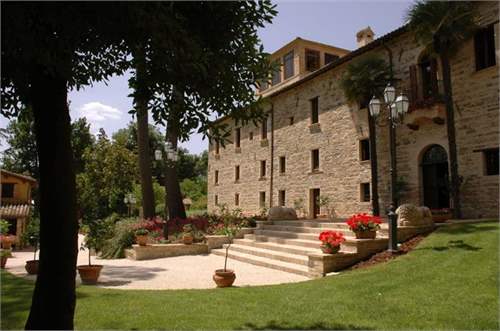
    The Lowdown: Don’t let the ‘Castle on the Lake for rent’ title throw you when you follow this link. This late sixteenth-century castle is for sale. Originally created by Cardinal Morigia, this property contains a terraced park, grand staircases, Renaissance-style statues, a swimming pool, tennis court and panoramic views of a lake. It is currently used as a hotel, complete with antique furniture, marble flooring and wood parquet, frescos, five bedrooms with bathrooms and balconies and more for a grand total of 13,073 square feet. Yet, it needs restoration.
    Why You Should Want This Castle: This castle is located in Piedmont Ghiffa, an area in northern Italy. This area is popular with tourists, thanks to adjacent Lake Maggiore and to the famous nearby Sacro Monte, a site of pilgrimage and worship for Christians. So, this steal-of-a-deal hotel could make a great investment property for anyone who wants to host guests. Or, just purchase it for the furniture and flip the hotel unfurnished. On the other hand, this romantic-looking property might just steal your heart. In that case, you might hire an architect to scope out the true state of affairs, as this price seems too good to be true.
    Price:: 15,000 EUR ($24,000 USD)
  3. French Chateaux LotAuvergne, France Châteaux Lot
    The Lowdown: If you don’t have the stomach for heavy-duty renovation, but you might be in the mood to build, perhaps this sweet little plot in France will tickle your fancy. This is a nicely-situated building plot located on the grounds of a nineteenth-century châteaux. You can build up to a 200m2 (2152.7 square feet) villa with two levels and a semi-attic for storage. You will have water, sewage, electricity and phone service, and the boundaries already have been marked off with newly planted hedges.
    Why You Should Want This Châteaux Lot: It’s located in Auvergne, folks - smack dab in the middle of France. This region is famous for its cheeses, mineral water exports and Michelin tires. Outside these material items, the buyer has full access to the communal swimming pool, sauna and bar area. So, no need to build anything other than your new home.
    Price:: 54,500.00 EUR ($86,466.71 USD)
  4. Bulgarian CastleBulgarian Castle
    The Lowdown: This lion-splashed property is located in a small and quiet European mountain village at the feet of the Stara Panina and Sredna Gora mountains (Balkan Mountains). But, the castle also is centrally located, as Sopot is about three miles away, Karlovo is about six miles distant to the east and it is 41 miles to the city of Plovdiv to the south, which is the second largest city in Bulgaria after the capital city, Sofia. A river passes near the castle village and the region is suitable for hunting and fishing. An asphalt road leads from the village to the castle, which makes this castle approachable during winter. The house is a three-story building with modern architecture, electricity, running water, sewage-system, etc. The courtyard contains a large area of cultivation that includes trees, flowers and bushes. All this crown home needs is a bit of exterior work, according to the sellers.
    Why You Should Want This Castle: If you do some research into the area, you’ll learn that Sopot is famous for its paragliding and handgliding, Karlovo is filled with history and roses (literally - this is large-scale rose production, including their famous rose oil), and Plovidv is an important economic, transport, cultural and educational center. All this comes together to provide you with an opportunity to appeal to a wide variety of tourists as you rent out your castle to visitors. Or, if you decide to live here yourself, you can enjoy one of the most ‘ready-to-move-in’ properties on this list.
    Price:: 55,000 EUR ($87,125.77 USD)
  5. Costa Rican CastleCosta Rican Castle
    The Lowdown: Before you pass judgement on this ‘castle’ (it is listed as such), look at the price and the amenities first. This property is conveniently located in the Nicoya Península in Costa Rica, with good access and ample public road frontage. It is close to Carrillo and Sámara beaches, and it has awesome panoramic views to scenic valleys. There are three rivers, two are small and one is big, on 481 acres. And, it comes with water and electricity.
    Why You Should Want This Castle: Although this castle doesn’t come with turrets, it is located in the Guanacaste region, known for sportsfishing, heavenly beaches, bird watching, horseback riding, excellent surfing, superb snorkeling and truly amazing and breathtaking scenery. The eastern border of Guanacaste is formed by a chain of volcanoes. They offer great hiking and views of the surrounding countryside. Dense and lush forests fill the valleys, and many endangered animals and birds reside here, including jaguars and tapirs. If you’re a nature enthusiast, you could lose yourself in this kingdom.
    Price:: $100,000 USD
  6. Slovakian CastleSouthern Slovakian Castle
    The Lowdown: If you’d like four bastions on your castle as well as 35 bedrooms, then this gem - located in the Casoviapolis region of Slovakia in eastern Europe - might be yours. The rooms which were used as classrooms for a primary school during the last half of the twentieth century. The property carries a large park in front with a small pond, and it also is in reach of all the amenities that Trnava has to offer. The history within this town dates back to 1211, if not earlier. After the establishment of Slovakia in 1993, Trnava became the capital of the newly created Trnava Region in 1996. Any person who chooses to purchase this castle also will enjoy access to universities, libraries, theaters, a district hospital and other modern amenities against an historical backdrop.
    Why You Should Want This Castle: This structure is large enough to house a single family as well as a few guests. Make it work as a honeymoon retreat, complete with a history that would suit the setting. The first written document about this castle was generated in 1583, when the Croatian nobel, Ungnada, invited other nobles to this residence for his daughter’s wedding. Although this castle has seen numerous renovations since that event, this castle’s Renaissance/Baroque stylings can capture the imagination of any newly-wedded couple. For the price listed below, how could you go wrong?
    Price:: 107,000 EUR ($169,711.46 USD)
  7. Polish CastleXVI-Century Palace in Lower Silesia
    The Lowdown: If your style is Baroque built with brick and stone, then this palace from the XVI century (1570) might tickle your historic decorating bone. Located in the Boleslawiec area of Poland (home of Boleslawiec Pottery), this building contains a strong foundation, an asphalt access road, electricity, sewer and water. Telephone lines, Internet access and a full basement makes this private property an absolute steal.
    Why You Should Want This Castle: While the property needs renovation, there’s a place for parking and the opportunity to purchase adjoining land. Along with all the amenities listed above, this building easily could be made into a tourist hotel for pottery fanatics. Much of the pottery made in this region is of high-quality, handpainted stoneware. In 1898, the German government established the Keramische Fachschule (Ceramic Technical Training School) to foster development of the art. The added plus is this castle’s terrace with mountain views.
    Price:: 125,000 EUR ($198,242.18 USD)
  8. Hungarian Castle19th Century Castle For Sale in Hungary
    The Lowdown: This European castle, built in the classicist style, is a gem in the rough. It is located in Kercseliget, Hungary, near the city of Kaposvar (the capital of the county of Somogy) and about thirty-one miles from the Balaton, one of the largest lakes in Europe and often called the “Hungarian Sea.” A water quality survey has been conducted on this property, and the water is spa-quality, the same as two other spas located nearby.
    Why You Should Want This Castle: Although this structure was built about 1840, the foundation is strong. Additionally, preliminary construction has begun to convert this building, which has a wine cellar, into a tourist facility. The spa waters add to the possibility that this castle could earn its keep, especially with its close proximity to Kaposvar and to the popular tourist destination of Lake Balaton.
    Price:: 150,000 EUR ($237,969.23 USD) (Negotiable)
  9. Irish CastleAn Irish Abode
    The Lowdown: The top write-up in this link is the one of interest, as it offers the Brackloon Castle Clonfert, County Galway for sale. Clonfert and its castle is part of the ancestral home of the Maddens and forms a stage of the Beara-Breifne Greenway which is based on the historic march of O’Sullivan Beara in 1603. Attacked many times and captured by Queen Mary’s forces during the sixteenth century, this castle was inhabited until the 1950s. At that time, teachers from the nearby Clonfert School were its inhabitants. They enjoyed four floors connected by a spiral stone staircase that, contrary to popular construction, spirals counterclockwise. The castle is now missing its upper floors and it is roofless, but the main structure appears sound and able to withstand restoration.
    Why You Should Want This Castle: If an Irish soul is reading this (especially a Madden), need I say more? But, just to entice you even further, the tower house of this castle is located on 8.5 acres overlooking a stream with opportunities for fishing. Plus, the owner can look for further entertainment on the Shannon, which is fit for sailing and cruising. This castle is situated close to the village of Clonfert, a tiny village in South Galway bordering County Offaly. This village is well known for Saint Brendan’s Church of Ireland Cathedral, the oldest living church in Ireland with an unbroken history of public worship.
    Price:: £120,000 ($239,605.18 USD)
  10. Fortified Castle and Jesuit EstateFortified Castle and Jesuit Estate
    The Lowdown: If you want a safe place to reside in the South American countryside, then you might find this fortified castle and 1790 Jesuit estate in Uruguay appropriate. The property is located on a 148-acre ranch in north Uruguayan hill country. Although the land around this area is traditionally known for sheep and cattle breeding, much of the area is being converted to forest. This may be the oldest castle for sale in Uruguay, as it dates back to Spanish colonial era, founded by Jesuits, and later used as a Spanish royal mail stage post.
    Why You Should Want This Castle: While the amenities are limited, many parts of this building are the original 1790s construction, including the entranceway. The property contains a quarters for staff, a barn and a workshop. You’ll own cattle installations along with a fieldstone corral. While you may not want to own cattle, these structures possibly could be used for horses. The property is located about 249 miles from Montevideo, which is the largest city, the capital and chief port of Uruguay. A big plus - most of that road is paved! The only problem, really, to acquiring this simple yet beautiful abode is the price. You may need to haggle down $10,000 USD to meet the the $250,000 mark, but this one was just too good to leave off the list!
    Price:: $260,000 USD
10 Comments

10 Beautiful Private Islands for Sale (That You Could Actually Afford)

Who hasn’t dreamed of living on a private island, away from the hustle and bustle of city life? But, how often have you dismissed this dream with thoughts that you couldn’t possibly afford this luxury? Well, you may need to rethink your dreams, because many private islands now are listed for less than $500,000 USD. In fact, you can find islands for less than $100,000. All you need to do is spend a little time searching online for your dream environment.

The point to remember in this situation is that you get what you pay for. Cheaper islands, on the whole, tend to be undeveloped. This means that you may need to acquire electricity, plumbing and land suitable for building to complete your dream of living on said island. Additionally, it may be tough to obtain a mortgage for island purchases, because most islands lack ‘comparables’ for valuation purposes. So, you’ll either need cash on hand or a solid business plan for development that could add valuation to your island (such as a resort).

On the other hand, you can employ such amenities as prefabricated homes, easy-to-install solar power, reverse-osmosis water filtration systems and composting toilets. All these items, which are perfect for island living, are within reach for an island dweller’s average budget. So, keep these plus-side items in mind when you tackle your search. The ten islands listed below will give you a head start, as they lead to real estate businesses that can help you realize your private island dream.

The list below is organized by price, with the least expensive listed first, and the most expensive at the end.

  1. Lighthouses for auctionWest Bank Lighthouse: The U.S. General Services Administration actually is auctioning two lighthouses/islands in New York. The one shown here, the West Bank Lighthouse, and the Old Orchard Shoal Lighthouse both are for sale. Both properties are open for bids starting at $10,000, and - as of this writing - no bids have been offered. On the plus side, both lighthouses offer 360-degree water views and both lighthouses retain basic integrity despite neglect. Plus, the new owners will claim a bit of history with either purchase. But, both lighthouses have been neglected, and they will be sold “as is” without warranties. Additionally, both properties require an easement to legally occupy the submerged land, and the properties must be maintained in accordance with the Secretary of Interior’s Standards for Rehabilitation and in consultation with the New York State Historic Preservation Office. The Old Orchard Shoal Lighthouse is located approximately 3.5 miles south of New Drop Beach on Staten Island, Richmond County, New York. The keeper’s quarters consist of approximately 1000 square feet of space with porthole-styled windows. The interior is brick-lined in the first three stories. The West Bank Lighthouse is located in Lower New York Bay and is situated approximately 3.2 miles east of Staten Island, Richmond County, New York. This property sits on a man-made island and includes a riprap breakwater which extends westward approximately 100 feet from the lighthouse. There are two pilings which serve as moorings, and the interior is accessed by a metal platform and ladder. Both properties are accessible only by boat. Current price: Starting at $10,000 USD.
  2. Dolphin Bay IslandDolphin Bay Island: This is a small island that consists of 6,000 sq. ft., but it is located in a very nice area near Bocatorito, Panama, with views of Dolphin Bay. Plus, access to the island is easy, with a connection to San Cristobal Island via a strip of mangrove and access by boat within twenty minutes from Bocas. You’ll find a few large trees and some pineapple plants, and the island sits in protected waters with deep water nearby. The island displays elevation, and it is perfect for a single-family home. Current price: $40,000 USD.
  3. Bereck IslandBereck Island: Canadian islands remain a relative bargain, with several available for less than $100,000. Bereck Island, located on Stuart Lake in British Columbia, Canada, represents one of these bargains. Stuart Lake is the seventh largest lake in B.C., and it is a fisherman’s paradise stocked with rainbow trout, lake trout and kokanee. The island is approximately one acre, and it is surrounded by a shallow rocky shelf on its south side that is exposed during low water level and that is visible during winter. The island is accessible by boat or by floatplane. Bereck Island is zoned as residential, so there should not be any problems building a dwelling. Nearby towns include Fort St. James, which is accessible by paved road and is located about 60 km north of Vanderhoof and 160 km northwest of Prince George. Current price: CAD $65,000 ($64,327.21 USD).
  4. David IslandDavid Island: Settle down on approximately five forested acres in Guysborough County, Nova Scotia. David Island lies in the bay of Port Felix, about 30km from the city of Canso and near the town of Whitehead. The existing simple 12′ x 16′ cabin was built in 2003, and it does not support a septic system. But, it will provide a roof over your head as you plan for your future residence (which is, in principal, possible). This island could serve as a great fishing camp, provided you bring potable water. The view includes the mainland and other islands, which lie in the Tor Bay direction. Current price: CAD $75,000 ($74,474.55 USD).
  5. Chris PinnacleChris Pinnacle: This sale consists of two islands, which comprise an area of approximately 2.47 acres or one hectare located in Jordan, on the western side of Guimaras, Philippines. One island contains a small bamboo hut with an outside seating area and a concrete pier. While no electricity runs to the islands, it is possible to transport power and water across from the mainland via underwater pipe. The mainland is only a few hundred meters, or a five-minute boat ride, from the island. The larger of the two islands holds a large area at the peak where a house could be situated. This view is magnificent, as you can enjoy the sunset to the west and unusual rock formations along the coastline to the east. The smaller island is in ‘virgin condition,